

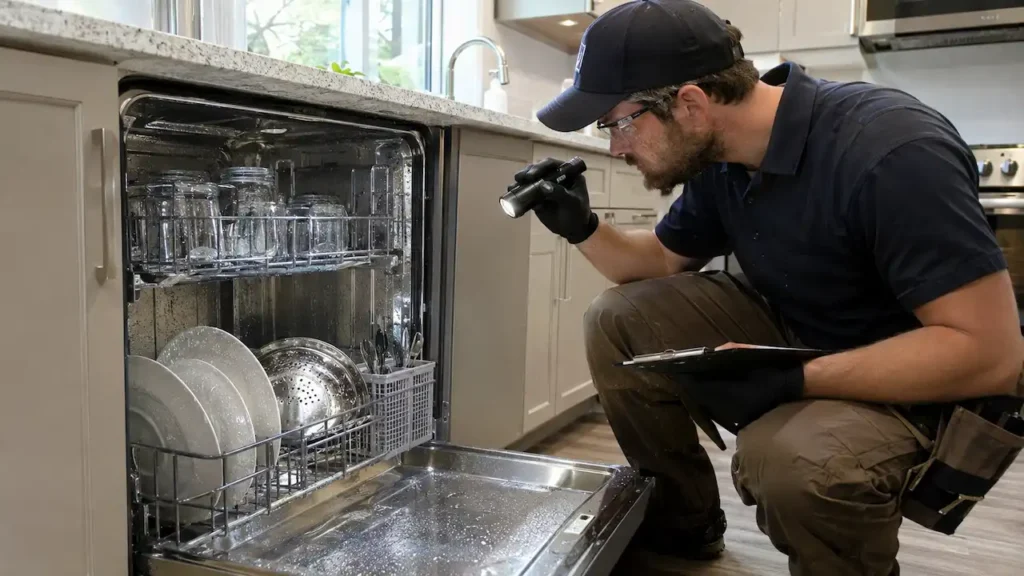
If your dishwasher leaves dishes wet after completing a full cycle, you may be wondering whether something is wrong with the appliance. Homeowners throughout Durham Region, including Whitby, Oshawa, and Bowmanville, can experience this problem because of insufficient rinse aid, incorrect loading, unsuitable drying settings, or malfunctioning components. Understanding the possible causes can help you determine whether simple troubleshooting or professional dishwasher repair is necessary.
Here’s what’s actually happening and what you can check yourself before calling someone in.
Why Your Dishwasher Leaves Dishes Wet After a Cycle
When a dishwasher leaves dishes wet, the cause may be related to its drying technology, rinse aid settings, or the way dishes are arranged inside the racks. Some models rely on condensation drying, while others use heating elements, fans, or automatic door-opening features. Checking your dishwasher’s drying method can help distinguish normal moisture from a potential mechanical problem.
Empty or Low Rinse Aid Dispenser
Rinse aid isn’t optional. It breaks the surface tension of water so droplets sheet off dishes instead of clinging. Without it, water beads up and stays put especially on glasses and plastic containers.
Check the rinse aid indicator light on your control panel. If it’s on, fill the dispenser. Most dishwashers need a refill every 30-40 cycles depending on hardness of your Durham Region water supply.
Plastic Items Stay Wet (That’s Normal)
Plastic doesn’t retain heat like ceramic or glass, so it cools faster during the drying phase. Water doesn’t evaporate off plastic as effectively, which is why your Tupperware is always wet even when everything else is bone dry.
This isn’t a defect. If only plastic items are damp and dishes, glassware, and metal utensils come out dry, your dishwasher is working as designed.
Incorrect Loading or Overcrowding
When dishes overlap or sit too close together, water gets trapped in crevices. Bowls stacked facing up collect pools of standing water. Overloading blocks airflow during the drying cycle.
Angle bowls and cups downward. Space items so air can circulate. Don’t block the heating element or drying fan with large platters.
Wrong Wash Cycle Selected
Quick wash and rinse-only cycles skip the heated dry phase entirely. If you’re consistently using short cycles to save time, your dishes won’t dry because the machine never activates the heating element or fan.
Switch to a normal or heavy cycle with heated dry enabled. Check your settings some models default to “air dry” to save energy unless you manually select heated dry.
Faulty Heating Element
Most dishwashers use a heating element at the bottom of the tub to evaporate moisture during the drying phase. If the element burns out or fails, dishes stay wet no matter what cycle you run.
You can visually inspect the element for breaks or corrosion, but testing it requires a multimeter and some electrical knowledge. If you’re not comfortable with that, it’s a job for a technician.
Clogged or Faulty Vent
Dishwashers vent steam during drying. If the vent door sticks closed or the fan motor fails, humid air stays trapped inside and condenses back onto your dishes.
The vent is usually located on the door or top of the tub. Listen during the drying phase you should hear the fan and feel warm air escaping. If you don’t, the vent assembly may need replacement.
What You Can Check Yourself
Before scheduling a dishwasher repair, try these quick checks:
- Refill the rinse aid dispenser and run a test cycle
- Select a cycle with heated dry enabled not eco or quick wash
- Rearrange dishes so bowls angle downward and items don’t overlap
- Inspect the heating element for visible damage or corrosion
- Listen for the vent fan during the drying phase
If those steps don’t solve it, you’re likely dealing with a failed component that needs professional diagnosis.
When to Call a Technician
I replace heating elements, vent assemblies, and thermostats regularly across Durham Region. Most drying problems come down to one of those three parts failing.
If your dishwasher is 12+ years old and needs a $300 heating element repair, sometimes it makes more sense to replace the unit entirely. I’ll tell you that straight up during the diagnosis I don’t push repairs that don’t make financial sense.
We provide upfront flat-rate pricing before starting any work through our appliance repair services. No surprises, no upsells.
Frequently Asked Questions
Why are only my plastic dishes wet?
Plastic doesn’t hold heat like glass or ceramic, so water doesn’t evaporate off it during the drying phase. This is normal. If glassware and dishes are dry, your dishwasher is working correctly.
How often should I refill rinse aid?
Most dishwashers need rinse aid topped up every 30-40 loads depending on your water hardness and dispenser setting. Check the indicator light on your control panel.
Can I use vinegar instead of rinse aid?
Don’t. Vinegar can damage rubber seals and gaskets over time. Rinse aid is formulated specifically for dishwashers and costs about $5 for a bottle that lasts months.
How much does it cost to replace a dishwasher heating element?
Parts typically run 60-120 depending on the brand. With labor, expect 150-250 for the full repair. If the machine is very old, replacement may be more cost-effective.
Should I always use heated dry?
Heated dry uses more energy but delivers completely dry dishes. If you’re okay with towel-drying plastic items, air dry is fine. For everything dry, use heated dry on normal or heavy cycles.
Ready to Fix Your Dishwasher Drying Problem in Durham Region?
If rinse aid and cycle settings haven’t solved the issue, you likely need a heating element, vent, or thermostat replaced. We diagnose and repair dishwasher drying problems across Bowmanville, Ajax, Whitby, Oshawa, and all of Durham Region usually same-day with parts on the truck.
Need Dishwasher Drying Problem Repair in Durham Region?
If your dishwasher leaves dishes wet even after checking the rinse aid dispenser, adjusting the loading arrangement, and selecting the recommended drying cycle, professional inspection may help identify the issue.
AJ Appliance Repair provides dishwasher repair services throughout Durham Region, including Bowmanville, Oshawa, Whitby, Ajax, and surrounding communities.
Whether the problem involves a heating element, temperature sensor, vent assembly, or another component, our technicians can diagnose the issue and recommend suitable repair options.
Call (905) 449-1985 or request a service quote to schedule dishwasher repair in Durham Region, Ontario.

