

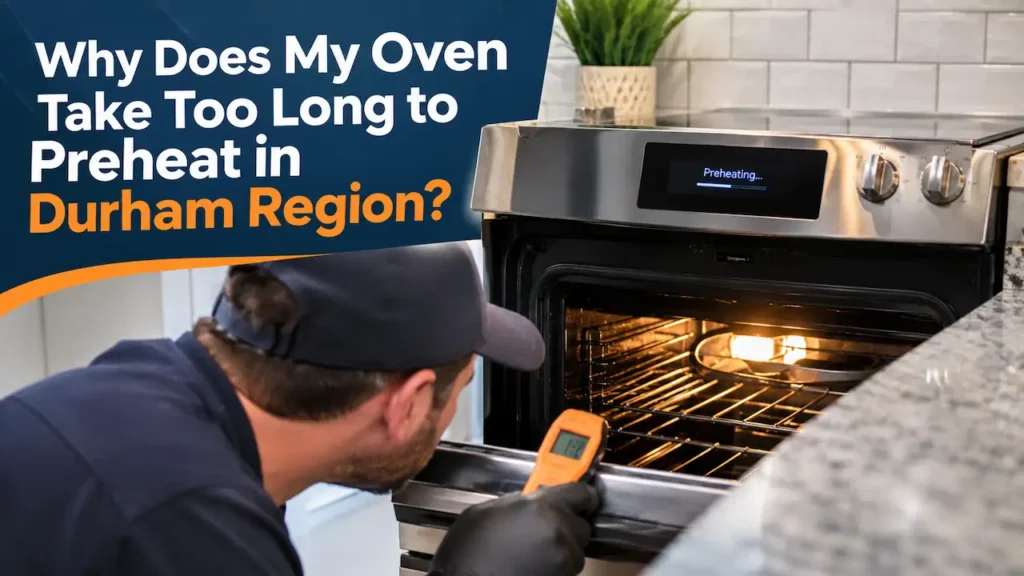
Why Does My Oven Take Too Long to Preheat in Durham Region?
An oven slow to preheat can disrupt meal preparation and leave Durham Region homeowners wondering whether their appliance needs repair. Faulty heating elements, worn door seals, weak gas igniters, and temperature sensor problems can all prevent an oven from heating efficiently. Understanding the warning signs can help you decide when professional inspection is necessary. Here’s what’s causing it and when you need someone to fix it. Why Is Your Oven Slow to Preheat? When an oven is slow to preheat, the cause may involve its heating system, temperature controls, or heat loss around the door. Normal preheating times vary by oven model, operating mode, and target temperature, so compare the appliance’s performance with the manufacturer’s guidance before assuming a component has failed. Faulty Heating Element (Electric Ovens) The bake element at the bottom or the broil element at the top generates the heat. If one of them is weak, burned out, or corroded, the oven limps along trying to reach temperature with half its power. You’ll often see a visible break in the element coil or it won’t glow bright red when the oven is on. Worn Door Seal The rubber gasket around your oven door keeps heat inside. After years of use, it hardens, cracks, or pulls away from the frame. Every time you close the door, heat escapes. You can test this by holding your hand near the closed door during preheat if you feel warmth radiating out, the seal is shot. Bad Temperature Sensor The oven’s thermostat relies on a thin metal probe inside the oven cavity. If that sensor drifts out of calibration or shorts out, the oven gets bad data and either shuts off too early or never heats aggressively enough. This is common in Samsung, LG, and Whirlpool models after about 8-10 years. Weak Gas Igniter (Gas Ovens) Gas ovens use an igniter to open the gas valve and light the burner. Over time, igniters weaken. They’ll glow, but they won’t pull enough current to open the valve fully. The result is a weak flame that barely heats the oven. If you hear clicking but don’t see a strong, steady flame within 90 seconds, the igniter is likely the problem. Control Board or Relay Issue Less common, but possible: the oven’s control board or a relay that powers the heating element may be failing. This usually shows up as intermittent heating or the oven cycling on and off unpredictably. What You Can Check Yourself Before calling for oven repair, here’s what’s safe to inspect: What you shouldnot do: don’t remove the back panel of the oven, don’t touch any wiring, and absolutely don’t open or adjust gas connections. If you suspect a gas leak you smell gas or hear hissing leave the house and call your gas utility or emergency services immediately. When to Call a Technician If the door seal looks fine and the element appears to be glowing, you’re into diagnosis that requires tools and experience. Temperature sensors need to be tested for continuity and resistance. Control boards need wiring diagrams. Gas igniters need to be tested under load to confirm they’re pulling the right amperage. Repair costs depend on the oven model, faulty component, and labour required. For a better understanding of potential expenses, read our guide to oven repair costs in Durham Region before scheduling service. Most of these repairs are same-day fixes when the right part is on the truck. We see a lot of Durham Region homeowners who’ve already spent money on parts that didn’t fix the problem because they guessed wrong on the diagnosis. If you’re not sure what’s broken, let someone who does this every day figure it out first. Replacing a bad heating element or igniter brings preheat time back to normal usually 10 to 12 minutes to 350°F. A new door seal stops heat loss immediately. A calibrated temperature sensor fixes erratic heating and ensures your oven actually reaches the temp you set. Frequently Asked Questions How long should a normal oven take to preheat? Most electric and gas ovens should reach 350°F in 10 to 15 minutes. If yours is taking 20+ minutes consistently, something is wrong. Can a dirty oven cause slow preheating? Not usually. Built-up grease and food debris can affect airflow slightly, but they won’t add 10 or 15 minutes to preheat time. The issue is almost always a failed part. Is it safe to use an oven that takes forever to preheat? It’s not dangerous, just inefficient. The exception is gas ovens if you smell gas or the igniter clicks constantly without lighting, shut it off and call someone immediately. How much does it cost to fix a slow-preheating oven in Durham Region? It depends on the part. Heating elements and igniters are common repairs. Door seals are inexpensive. Control boards cost more. We’ll give you an upfront flat-rate price before we do any work. Need Oven Preheating Repair in Durham Region? If your oven is slow to preheat even after checking the settings and inspecting the door seal, professional diagnosis may help identify the underlying problem. AJ Appliance Repair provides oven repair services for homeowners throughout Durham Region, including Bowmanville, Oshawa, Whitby, and surrounding communities. Whether the issue involves a heating element, gas igniter, temperature sensor, or control system, our technicians can inspect the appliance and recommend appropriate repairs. Call (905) 449-1985 or request a service quote to schedule appliance repair in Durham Region, Ontario.

